What's the difference between a pergola and a gazebo?
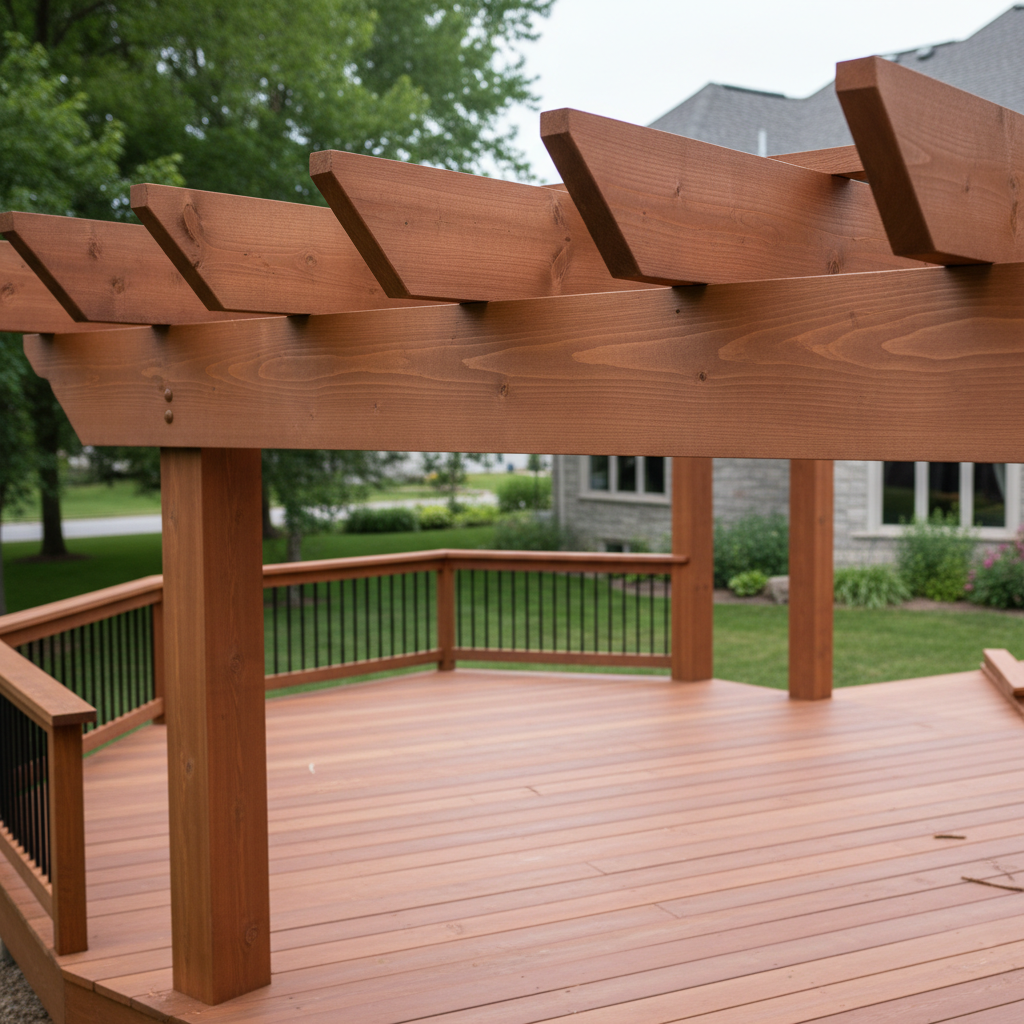
This is a big one, and folks mix 'em up all the time. A pergola, at its core, is an open structure. It's got posts supporting an open roof, usually with beams and rafters that create a lattice-like top. The idea is to provide partial shade, define a space, and maybe give some climbing plants a place to grow. You're not fully enclosed; you're still feeling the breeze and seeing the sky, just with some filtered light. Think of it as an outdoor room without walls.
A gazebo, on the other hand, is generally a fully roofed structure, often octagonal or round, with a solid roof that offers complete protection from rain and sun. They usually have open sides, but they're definitely more of a shelter. You'd sit in a gazebo to stay dry during a drizzle, but a pergola is more about creating an ambiance and some dappled shade. We build both, but they serve different purposes for your outdoor living.
Do I need a permit to build a pergola in Medina?
Yep, almost certainly. This isn't something you want to skip. In Medina, like most cities, any permanent structure that's attached to your house or is over a certain size (usually 200 square feet for detached structures, but always check the current code) will require a building permit. Even if it's detached and smaller, there might be zoning setbacks to consider. You've got to make sure it's built to code, especially with our Minnesota snow loads. The city wants to ensure it's safe and won't cause problems down the line. We handle all the permitting paperwork for our projects, because honestly, navigating city hall can be a headache if you don't do it regularly.
What's the best material for a pergola in our Minnesota climate?
For our Medina weather, you've got a few solid choices, but each has its pros and cons. Wood is classic, right? Cedar and redwood are popular because they're naturally resistant to rot and insects, and they look fantastic. Pressure-treated pine is another common one, more budget-friendly, but you'll want to stain or paint it to protect it. The downside with wood is the maintenance – you'll need to re-stain or seal it every few years to keep it looking good and prevent weathering from our harsh winters and humid summers.
Then there's vinyl or composite. These are practically maintenance-free. You just wash 'em down. They won't rot, splinter, or need painting. They come in various colors, and while they might not have the natural feel of wood, they're incredibly durable. Aluminum is another great option, very strong, lightweight, and also low maintenance. It's really about what look you're going for and how much upkeep you're willing to do. I've seen some beautiful aluminum pergolas in the newer developments around Hamel Road that look sharp and hold up great.
How much shade does a pergola actually provide?
That depends entirely on the design. A standard pergola with just beams and rafters will give you partial, dappled shade. It's not like being under a solid roof; you'll still get sun filtering through. Think 40-60% shade, maybe. If you want more shade, we can add purlins closer together, or incorporate a louvered roof system. These adjustable louvered pergolas are fantastic because you can open them up for full sun or close them completely for full shade and even rain protection. You can also add retractable canopies or shade sails. It's all about how much sun you want to block and what kind of flexibility you need. We'll talk through your sun exposure and what you're hoping to achieve.
Can a pergola be attached to my house or does it have to be freestanding?
Both are totally possible, and it just depends on your space and what you're trying to accomplish. An attached pergola, sometimes called a 'lean-to' style, uses your house as one of its supports. This is great for extending your living space directly off a patio or deck, and it can feel like a natural extension of your home. It often saves a bit on materials and labor since you're using an existing structure for support.
A freestanding pergola, on the other hand, stands on its own, supported by four or more posts. These are perfect for creating a distinct outdoor 'room' in your yard, maybe over a fire pit area, by a pool, or even in a garden. They offer more flexibility in terms of placement. We've built plenty of both styles for Champion Decks clients, and each has its own charm and benefits depending on your specific needs.
What kind of foundation does a pergola need?
This is crucial for stability, especially with our freeze-thaw cycles here in Minnesota. You can't just plop posts on the ground. For a permanent structure, you'll need concrete footings that go below the frost line, which is usually 42-48 inches deep around Medina. This prevents the posts from heaving up and down with the ground freezing and thawing, which would eventually destabilize your whole pergola. We typically use concrete piers with post anchors that keep the wood (if you're using wood) off the ground to prevent rot. For smaller, lighter, non-permanent structures, you might get away with concrete blocks or surface-level footings, but for anything substantial, proper deep footings are non-negotiable. It's all about making sure your investment lasts for decades, not just a few seasons.
How long does it take to build a pergola?
Once we've got the design finalized and permits in hand, the actual construction time for a typical residential pergola isn't usually that long. For a standard-sized, straightforward design, we're often looking at anywhere from a few days to a week. Larger, more complex designs, especially those with integrated lighting, advanced louver systems, or custom features, can take longer – maybe two weeks or so. The biggest variable is often the lead time for materials and getting those permits approved. We always aim to give you a clear timeline upfront so you know what to expect from start to finish.